If your Amazon product isn’t getting traction, the issue usually isn’t quality — it’s visibility. Learning how to drive external traffic to Amazon is one of the most effective ways to break through competition, accelerate launches, and create sustainable growth without relying solely on Amazon PPC.
External traffic allows you to bring high-intent buyers from outside Amazon, influence conversion velocity, and strengthen ranking signals that the A10 algorithm rewards.
Instead of competing only inside Amazon’s crowded ad ecosystem, you control how and where demand is created—making it one of the most effective strategies for launches, relaunches, and long-term growth.
Best External Traffic Sources for Amazon
1. Google Ads: High-Intent Buyers Ready to Purchase
Google search results page showing buyer-intent product keywords that can be targeted with Google Ads for Amazon listings
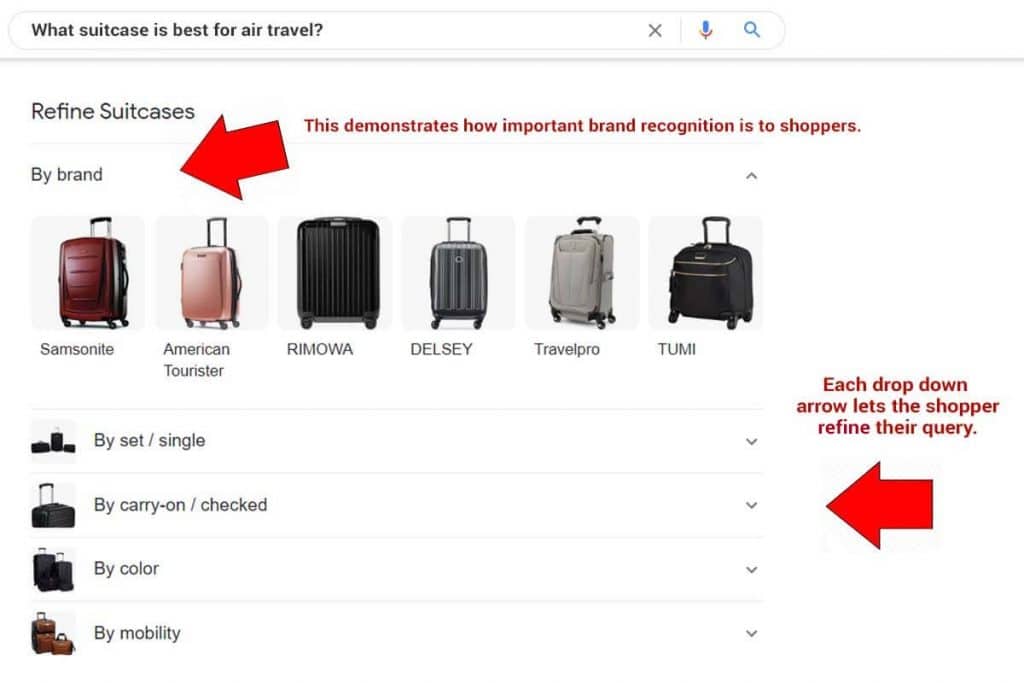
Google Ads is one of the strongest external traffic sources for Amazon because users are actively searching for solutions.
Why Google Ads Work?
Google Ads perform well for Amazon because they align closely with Amazon’s ranking signals.
Key advantages include:
- High buyer intent: Users are searching for specific solutions, not casually scrolling
- Strong keyword targeting: Sellers can target long-tail, purchase-ready keywords
- Immediate scalability: Campaigns can be launched and scaled quickly once profitability is proven
When these clicks convert on Amazon, they send strong demand signals back to the algorithm
Best Campaign Types
- Search campaigns using long-tail keywords
- Competitor brand targeting (where compliant)
- Problem-based queries (e.g., “best [product] for [use case]”)
Best Practices
To maximize ROI and protect Amazon’s performance:
- Send traffic directly to optimized Amazon listings, not external landing pages
- Always use Amazon Attribution links to track conversions accurately
- Optimize for conversion rate, not just click volume
When managed correctly, Google Ads can dramatically accelerate Amazon launches.
2. Social Media Advertising: Demand Creation at Scale
Platforms like Facebook, Instagram, and TikTok are ideal for product discovery, especially for newer brands.
How Social Traffic Should Be Used?
Social ads rarely convert cold audiences immediately. Instead, they should follow a structured flow:
- Educate or entertain first using problem-aware content
- Build trust through visuals, video demonstrations, and social proof
- Retarget engaged users with Amazon-focused offers
This approach ensures traffic arriving on Amazon is already familiar with the product.
Winning Creative Angles
High-performing social ads often use:
- Problem → solution storytelling that highlights real-world use cases
- UGC-style videos that feel authentic rather than overly produced
- Before-and-after demonstrations showing clear product benefits
Social traffic is most effective when integrated into a comprehensive full-funnel strategy, rather than being used as a standalone traffic source.
3. Influencer & Creator Marketing: Trust-Based Traffic
Influencers bring something ads cannot — credibility.
Why Influencer Traffic Converts Well?
Influencer-driven traffic performs strongly because:
- Audiences already trust the creator’s recommendations
- Products are shown in real-world usage scenarios
- Engagement rates are typically higher than standard ads
These factors reduce buyer hesitation once users land on Amazon
How to Use Influencers Effectively?
To maximize impact:
- Focus on micro-influencers with niche-relevant audiences
- Use Amazon Attribution links to measure true performance
- Repurpose influencer content into paid ads for additional reach
Influencer traffic is especially powerful during launches when social proof is still developing.
4. Email Marketing: The Highest-Converting Traffic Source
If you already have an audience, email marketing often delivers the highest conversion rates among all external traffic sources. This is because trust has already been established before the click.
Email traffic sends some of the strongest positive signals to Amazon’s algorithm.
Effective Email Use Cases
Email campaigns work particularly well for:
- Product launch announcements
- Limited-time promotions or discounts
- Product restock or replenishment reminders
Because recipients already recognize the brand, they are more likely to convert quickly on Amazon.
5. Content Marketing & SEO: Long-Term Traffic That Compounds
Content-driven traffic may take longer to build, but it delivers long-term, compounding value. This strategy supports both brand authority and sustained Amazon sales over time.
Content Types That Work Well
High-performing content formats include:
- Buying guides targeting commercial keywords
- Product comparison articles addressing buyer objections
- Educational blog posts that solve specific problems
When optimized correctly, content marketing drives consistent, high-quality traffic that supports Amazon rankings and off-Amazon brand growth simultaneously.
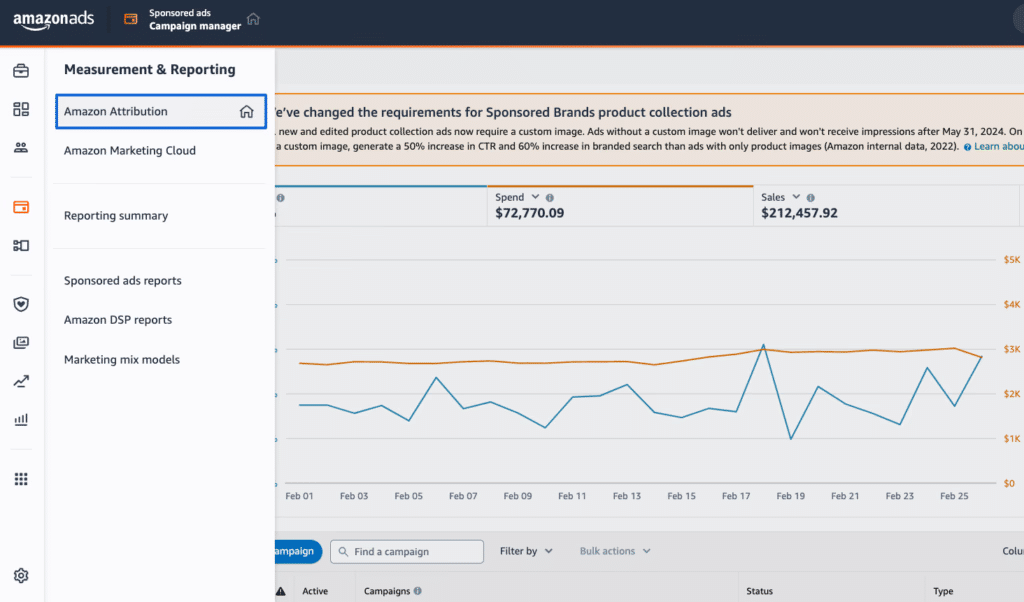
Using Amazon Attribution to Track External Traffic
Amazon Attribution allows sellers to accurately measure the performance of external traffic sources and understand which channels truly drive sales.
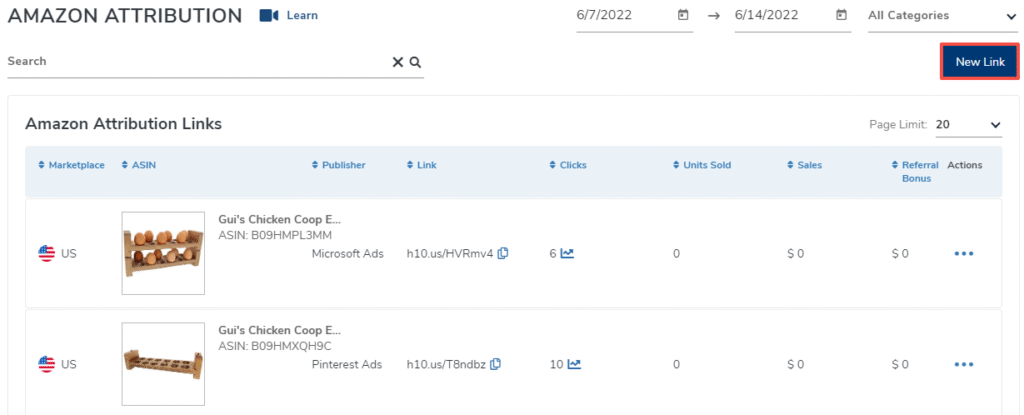
With Amazon Attribution, sellers can track:
- Click-through rate from external platforms
- Conversion rate on Amazon listings
- Sales generated by each traffic source
Without attribution, sellers are forced to guess. With it, brands can:
- Scale profitable channels with confidence
- Cut wasted ad spend
- Continuously optimize traffic quality
Amerify integrates Amazon Attribution into every external traffic strategy to ensure decisions are data-driven, measurable, and scalable.
Amazon Attribution dashboard in Seller Central showing clicks, conversions, and sales generated from external traffic sources
How to Prepare Your Amazon Listing for External Traffic?
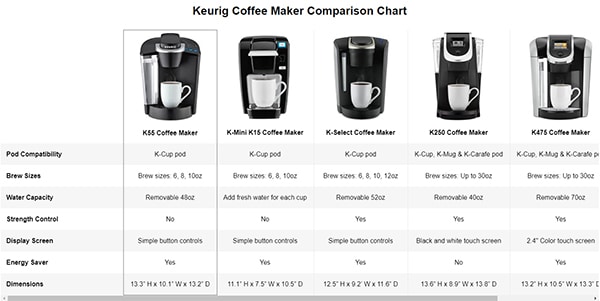
Amazon A+ Content example on a US product listing designed to increase conversion rate from external traffic

Before driving traffic, ensure your listing includes:
- High-quality main image that stands out in search
- Clear, benefit-driven title
- Optimized bullet points focused on buyer pain points
- A+ Content that reinforces trust
- Competitive pricing and promotions
External traffic magnifies what already exists — good or bad.
External Traffic for Amazon Product Launches
External traffic is especially powerful during launches because it:
- Creates immediate sales velocity, which is critical for triggering Amazon’s ranking systems
- Helps new products rank for competitive keywords faster, even in crowded categories
- Builds early momentum, increasing confidence among future buyers and the algorithm alike
Instead of waiting weeks for organic discovery, external traffic allows brands to manufacture early demand signals in a controlled, compliant way.
A structured launch strategy often includes:
- Pre-launch traffic warm-up
Light traffic is introduced to test messaging, creatives, and conversion readiness. - Launch-phase traffic bursts
High-intent traffic is deployed strategically to generate sales velocity during the critical launch window. - Post-launch optimization and scaling
Data from attribution and performance tracking is used to refine campaigns and scale what works.
This is where professional guidance makes the biggest difference.
Common Myths About External Traffic to Amazon
Myth 1: External Traffic Hurts Rankings
This is false. Poor-quality traffic hurts rankings, not external traffic itself. High-intent, well-targeted traffic that converts sends positive signals and supports ranking growth.
Myth 2: Only Amazon Ads Matter
Amazon PPC is important, but relying on it alone limits scalability. External traffic diversifies demand sources and reduces long-term dependence on rising ad costs.
Myth 3: More Traffic Is Always Better
Traffic volume alone doesn’t matter. Conversion quality matters far more. Fewer high-intent buyers outperform large volumes of unqualified clicks every time.
How Amerify Drives Profitable External Traffic to Amazon?
Amerify specializes in end-to-end Amazon product launch and growth strategies, including external traffic that converts.
Our process includes:
- Deep listing optimization before traffic launch to ensure high conversion rates
- Channel selection based on product type, market demand, and competition
- Amazon Attribution setup and tracking for full performance visibility
- Continuous testing, optimization, and scaling to maximize ROI
We don’t chase clicks or vanity metrics. We build repeatable systems that drive sales, improve rankings, and support long-term brand growth on Amazon.
When Should You Use an Amazon Marketing Agency?
You should consider professional support if:
- Your product launch isn’t gaining traction despite ad spend
- Amazon PPC costs are increasing without proportional sales growth
- External traffic hasn’t delivered ROI due to poor execution or tracking
- You want predictable, scalable growth rather than trial-and-error marketing
An experienced agency eliminates guesswork and shortens the path to profitability.
Why External Traffic Is Critical for Amazon Growth in 2026?
Amazon has become increasingly competitive. Thousands of new products launch daily, and organic visibility is harder to earn than ever.
External traffic helps sellers by:
- Increasing session volume
- Improving sales velocity, a key ranking factor
- Sending positive engagement signals to Amazon’s algorithm
- Reducing over-reliance on Amazon ads
Amazon actively encourages external traffic through tools like Amazon Attribution, which confirms that off-Amazon traffic is not only allowed — it’s rewarded when done correctly.
How Amazon’s Algorithm Responds to External Traffic?
Amazon’s A10 algorithm is designed to reward listings that demonstrate real buyer demand, not just ad-driven activity.
When external traffic is sent to Amazon and converts, it strengthens several of the algorithm’s most important ranking signals.
Specifically, Amazon prioritizes:
- Conversion rate: How many visitors turn into buyers after landing on your listing
- Sales velocity: How quickly your product generates sales within a given time frame
- Relevance to search queries: How closely your listing matches what buyers are searching for
- Buyer engagement: Time on page, scrolling behavior, and interaction with listing content
When external visitors land on your Amazon listing and make a purchase, Amazon interprets this behavior as genuine market demand. As a result, listings often experience:
- Improved keyword rankings for both primary and secondary search terms
- Increased organic impressions, leading to more visibility without additional ad spend
- Reduced reliance on paid ads as organic placement improves
This is why external traffic can be such a powerful growth lever during product launches and scaling phases.
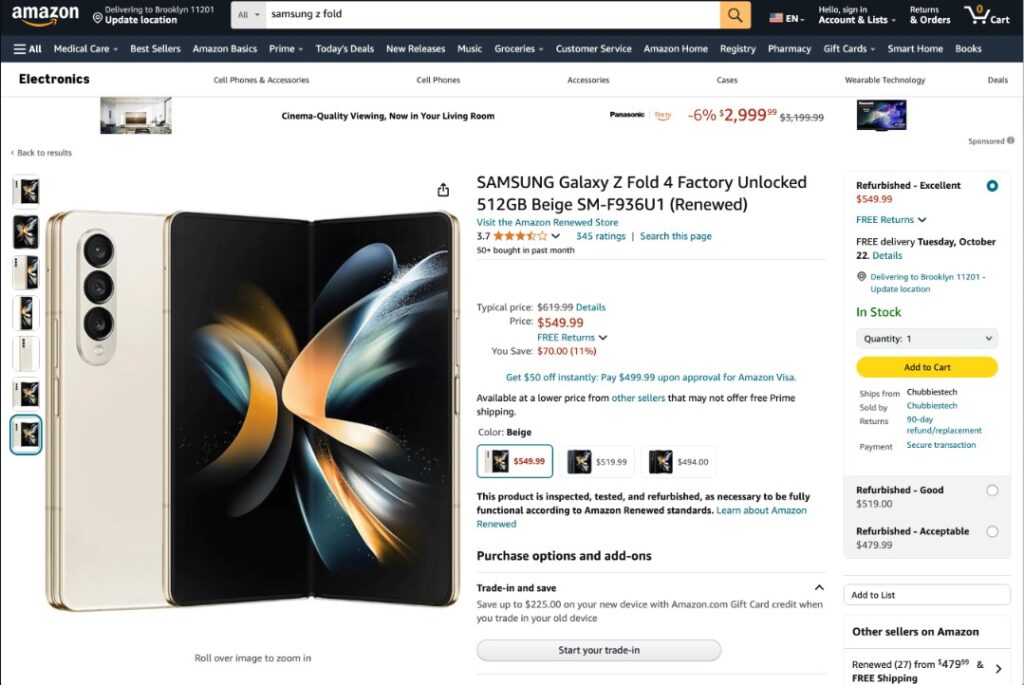
Amazon US product listing page showing Buy Box, product title, bullet points, and A+ Content where external traffic converts into Amazon sales
The Biggest Mistake Sellers Make With External Traffic
The most common—and costly—mistake Amazon sellers make is sending external traffic before their listing is fully optimized.
If a listing has any of the following issues:
- Weak or uncompetitive images that fail to stop the scroll
- An unclear value proposition that doesn’t immediately explain why the product is better
- Poor reviews, low review count, or pricing issues that create buyer hesitation
External visitors are likely to bounce without making a purchase. This not only wastes ad spend but can also hurt conversion rate and ranking momentum during critical launch windows.
At Amerify, external traffic is always paired with pre-launch and pre-scale optimization to ensure traffic converts profitably.
Conclusion:
Driving external traffic to Amazon is no longer optional for competitive sellers — it’s a growth requirement. When executed correctly, external traffic increases visibility, accelerates rankings, and reduces dependence on Amazon ads.
If you’re ready to drive high-converting external traffic and launch your Amazon products with confidence, Amerify can help.