If your Amazon account has been terminated, the first question is simple: how long until I can sell again?
In most cases, Amazon responds to a termination appeal within 7 to 30 days. However, that’s only an average. The real timeline depends on, in what way Amazon categorizes your violation internally.
For straightforward performance metric issues, you may receive a response within a week. But if your account was terminated due to authenticity concerns, intellectual property complaints, linked accounts, or a Section 3 violation, expect a longer review window—sometimes extending beyond 45 or even 60 days.
The difference isn’t luck. It comes down to:
- Risk classification of your violation
- Documentation verification requirements
- Accuracy and structure of your appeal
- Your account’s compliance history
Amazon Termination Appeal Timeline by Violation Type
Not all suspensions are reviewed equally. Amazon’s internal Performance Team prioritizes cases based on perceived risk to customers and the marketplace.
| Termination Type | Typical Appeal Review Time | Complexity Level |
| Order Defect Rate / Late Shipment | 2–7 days | Low |
| Listing Policy Violations | 5–14 days | Moderate |
| Intellectual Property (IP) Complaints | 10–30 days | High |
| Authenticity / Inauthentic Claims | 14–30+ days | High |
| Linked Accounts | 21–45+ days | Very High |
| Section 3 Suspension | 30–60+ days | Severe |
1. Order Defect Rate or Shipping Violations
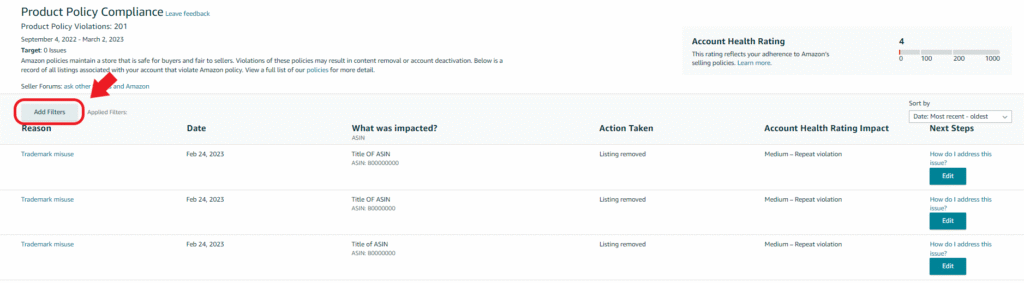
These cases are metrics-based. Amazon reviews performance data and evaluates whether corrective measures are sufficient.
Since these don’t typically involve fraud risk or supply chain concerns, review time is shorter.
However, if your metrics show long-term negligence rather than a temporary spike, Amazon may require bigger operational changes before reinstatement.
2. Intellectual Property & Authenticity Complaints
These suspensions trigger supplier verification and invoice audits. Amazon may contact your supplier directly or cross-check business registration databases.
If documentation is incomplete or mismatched, delays are common.
3. Linked Accounts
Linked account suspensions occur when Amazon detects operational overlap between multiple seller accounts. This can include:
- Shared IP addresses
- Banking details
- Device fingerprints
- Tax information
These reviews are manual and risk-based, which is why they often take 3–6 weeks or longer.
4. Section 3 Violations
Section 3 relates to Amazon’s Business Solutions Agreement. These are considered severe and often involve:
- Suspected policy manipulation
- Inauthentic inventory risk
- Abuse of Amazon systems
- Account circumvention
These investigations require cross-department review, extending timelines significantly.
What Determines Amazon Appeal Response Time?
Knowing by what method Amazon evaluates appeals helps you avoid costly delays.
1️-Violation Severity and Risk Classification
Amazon assigns internal risk tiers. The higher the perceived customer risk, the deeper the investigation.
For example:
- A temporary shipping delay = operational issue
- Inauthentic inventory claim = marketplace trust issue
Trust-related cases always take longer.
2️-Plan of Action (POA) Quality
Your POA is not a letter—it’s a compliance document.
Amazon expects:
Root Cause (Specific & Operational)
Avoid vague statements like:
“We experienced unexpected issues.”
Instead, explain:
- What failed in your workflow?
- Which process broke down?
- Why did that failure occur?
Amazon wants accountability, not excuses.
Corrective Actions Taken
Detail exactly what you have already done.
For example:
- Removed affected ASINs
- Refunded impacted customers
- Changed supplier
- Updated fulfillment workflow
Immediate corrective steps demonstrate seriousness.
Preventive Systems Implemented
This is where most sellers fail.
You must show:
- New SOPs
- Inventory inspection procedures
- Quality control checkpoints
- Staff training protocols
- Software monitoring systems
Amazon wants proof that the issue will not repeat.
3️-Documentation Accuracy & Supplier Validation
For authenticity cases, Amazon may validate:
- Invoice authenticity
- Supplier contact details
- Purchase quantities
- Business registration
Common delays happen because:
- Invoices are cropped
- Quantities don’t match ASIN volume
- Addresses differ from the Seller Central profile
- Supplier websites are inactive
If documentation fails verification, review time increases dramatically.
4️-Account History & Performance Trends
If your account has prior violations, Amazon may conduct a deeper audit before approving reinstatement.
Long-standing compliance history improves credibility. Repeated infractions reduce it.
Why do some Amazon Appeals Take 60+ Days?
If your appeal exceeds 30 days, one of these factors is usually responsible:
1. Multiple Resubmissions
Every time you submit a new appeal, it re-enters the queue. This resets the timeline.
Submitting multiple rushed appeals often delays reinstatement by weeks.
2. Inconsistent Statements
If your second appeal contradicts your first explanation, Amazon may question your credibility.
Consistency matters.
3. Linked Account Web Investigations
Amazon cross-analyzes:
- Payment instruments
- Device access patterns
- Login history
- Related seller accounts
These are not instant reviews—they require risk-team assessment.
4. Escalation Errors
Contacting general support instead of the Performance Team does not speed things up.
Improper escalation can actually slow the process.
Can You Speed Up an Amazon Termination Appeal?
You cannot bypass Amazon’s internal review queue.
But you can eliminate unnecessary delays.
Step 1: Conduct an Internal Operational Audit
Before writing anything, analyze:
- Customer complaints
- Return reasons
- Fulfillment reports
- Supplier agreements
Identify the true breakdown.
Step 2: Gather Clean, Verifiable Documentation
Only submit:
- Recent supplier invoices
- Manufacturer authorization letters
- Business licenses
- Supply chain verification
Never edit documents. Amazon has digital forensic tools.
Step 3: Draft a Compliance-Focused POA
Structure matters.
Use clear headers:
- Root Cause
- Corrective Actions
- Preventive Measures
Avoid long paragraphs. Keep it precise.
Step 4: Submit Once With Confidence
Submitting one strong appeal is better than five weak ones.
Amazon values clarity and completeness.
Step 5: Escalate Strategically (If Necessary)
Escalation should follow hierarchy:
- Performance Notification Response
- Revised appeal with stronger evidence
- Executive-level escalation (only in justified cases)
Escalation without new evidence rarely succeeds.
Appeal Process Breakdown:
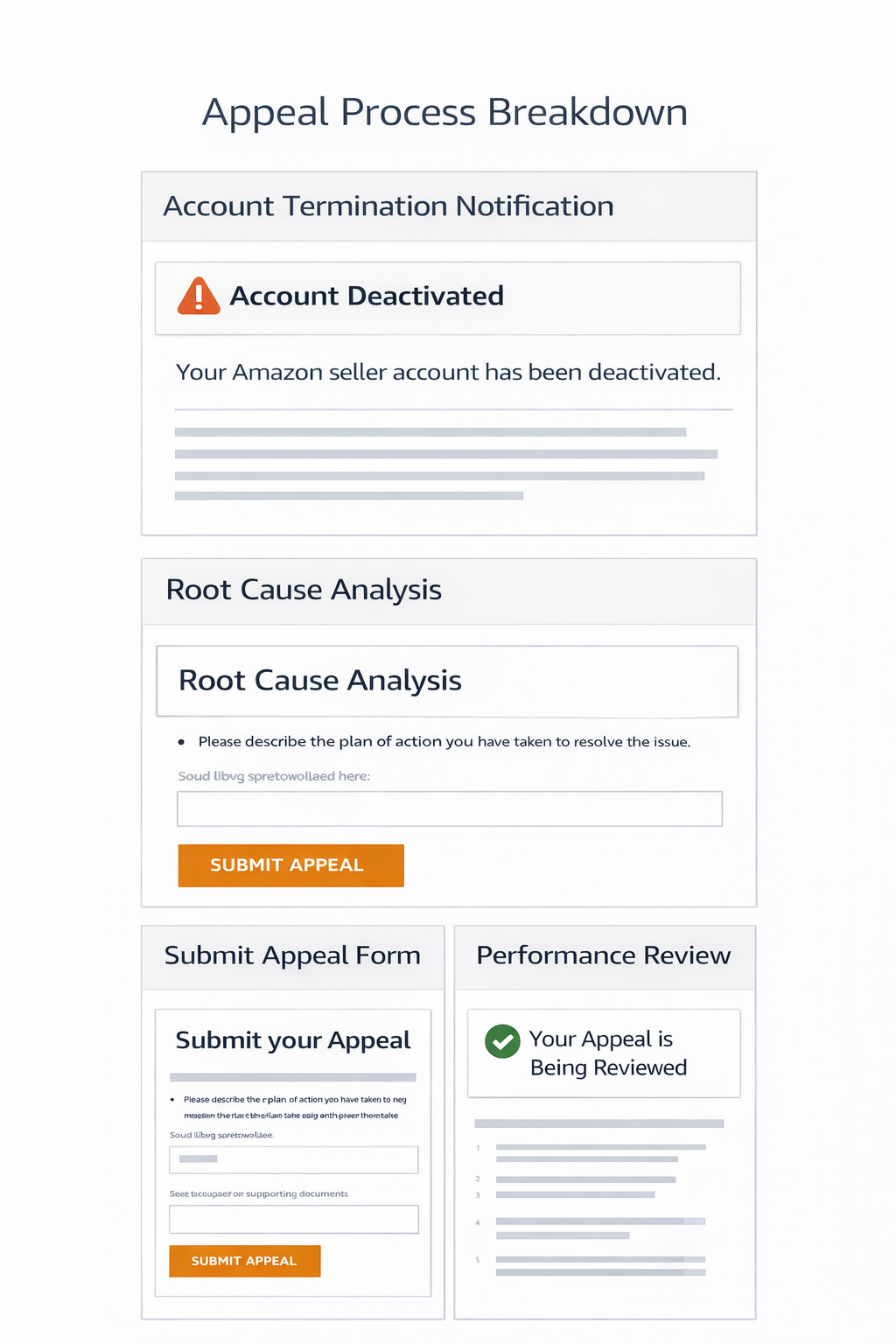
1. Account Termination Notification
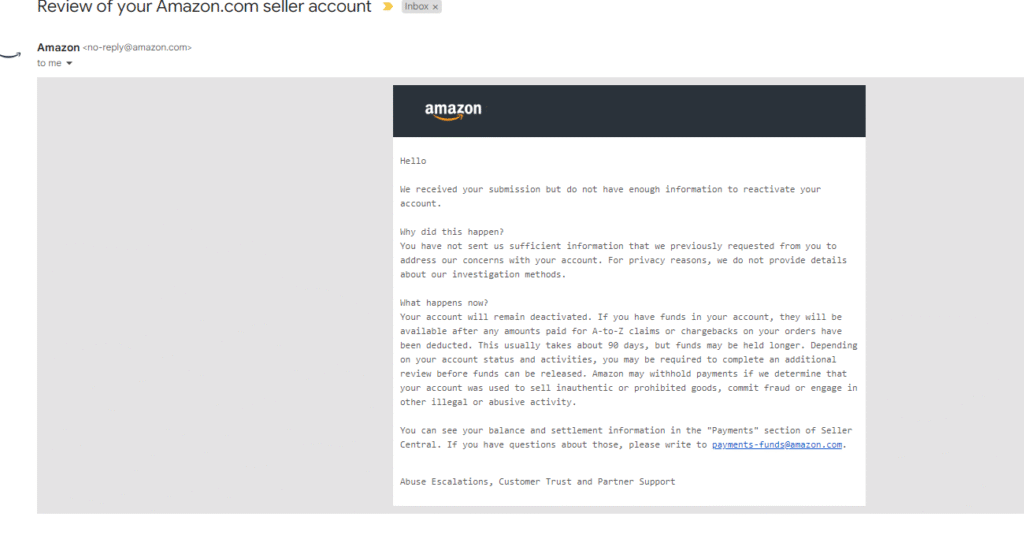
Amazon notifies you through Seller Central and email when your account is deactivated or suspended. The notice outlines the policy violation and may request a Plan of Action or supporting documentation.
2. Internal Root Cause Review
Before submitting an appeal, you must identify the real reason behind the suspension—not just the symptom. This includes reviewing performance metrics, customer complaints, supply chain issues, or compliance gaps that triggered the violation.
3. Appeal Submission
You submit your Plan of Action through Seller Central, clearly outlining the root cause, corrective actions taken, and preventive measures implemented. Strong appeals are structured, fact-based, and supported by invoices, SOP updates, or compliance documents when required.
4. Performance Team Evaluation
Amazon’s Seller Performance team reviews your appeal to assess risk, policy compliance, and corrective validity. They may verify documentation, review account history, or conduct deeper compliance checks before making a decision.
5. Decision Issued
Amazon communicates the outcome via email and your Account Health dashboard. The decision may include reinstatement, a request for additional information, or confirmation that the appeal was denied.
6. Reinstatement or Further Review
If reinstated, selling privileges are restored, though performance metrics may remain under close monitoring. If denied, you may need to submit a revised appeal with stronger documentation or escalate strategically to avoid prolonged suspension.
What Happens After Reinstatement?
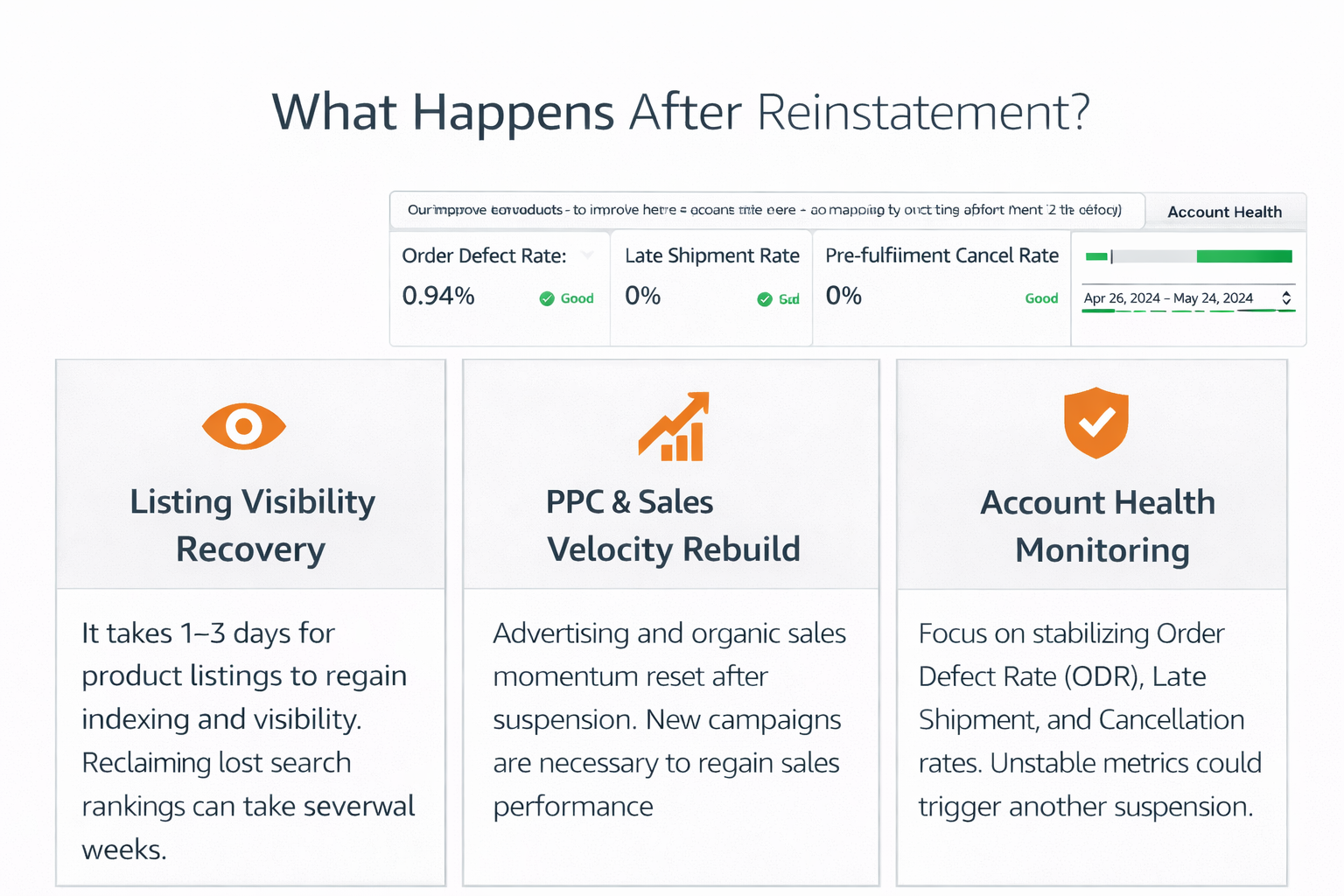
Reinstatement is not the end—it’s the beginning of recovery.
1️-Listing Visibility Recovery
Your ASINs may take 24–72 hours to regain full indexing.
In competitive niches, regaining previous ranking may take 2–6 weeks.
2️-PPC & Sales Velocity Rebuild
Suspension pauses advertising campaigns. Once reinstated:
- PPC performance resets
- Organic ranking declines
- Conversion history weakens
A structured relaunch strategy is necessary to regain momentum.
3️-Account Health Monitoring
Maintain:
- ODR below 1%
- Late shipment rate below 4%
- Cancellation rate below 2.5%
Failing to stabilize metrics increases the risk of repeat suspension.
When Should You Hire an Amazon Appeal Expert?
You should consider expert support if:
- Your first appeal was denied
- You’re facing Section 3 or linked accounts
- Revenue loss exceeds $10,000+ per month
- Amazon requests detailed compliance documentation
- You’ve submitted multiple unsuccessful appeals
At high revenue levels, downtime costs more than professional help.
How Amerify Handles Amazon Termination Appeals?
Amerify approaches reinstatement strategically and systematically.
We conduct:
- Full account audit and risk assessment
- Root cause forensic analysis
- Structured, compliance-ready POA drafting
- Documentation verification before submission
- Escalation strategy planning
- Post-reinstatement recovery planning
Our objective is first-submission approval to minimize revenue disruption.
Frequently asked questions
Does Amazon automatically reject first appeals?
No, Amazon does not automatically reject first appeals. However, many first submissions fail because sellers provide emotional explanations instead of structured root cause analysis, corrective actions, and preventive measures. A properly formatted, policy-focused appeal has a significantly higher approval rate.
Can I speed up Amazon reinstatement?
You cannot directly accelerate Amazon’s internal review process. However, you can prevent unnecessary delays by submitting a complete, well-documented, and policy-aligned appeal the first time. Strong documentation and clear corrective actions reduce back-and-forth communication and review resets.
How many times can you appeal to Amazon’s termination?
Amazon does not publish a fixed limit on appeals. That said, repeated weak or duplicate appeals reduce seller credibility and may trigger stricter scrutiny. Each submission should introduce new evidence, stronger documentation, or a revised corrective strategy to remain effective.
What is a Section 3 Amazon suspension timeline?
A Section 3 suspension typically takes 30–60+ days to resolve because it involves risk assessment reviews related to fraud, misuse, or policy breaches. These cases often require deeper internal audits, making them more complex than standard performance-based suspensions.
Final Thoughts
Most Amazon termination appeals take between 7 and 30 days, but severe cases can extend well beyond that. The biggest factor influencing approval speed is not luck—it’s precision.
Every day your account remains terminated:
- Sales stop
- Rankings decline
- Competitors gain share
If your Amazon account is suspended or terminated, you need a structured reinstatement strategy. Don’t let a delayed appeal cost you more sales.
Contact us for a Business Consultation and start your reinstatement strategy with experts who know how to navigate Amazon’s review process effectively.